
# Jeju Beyond the Beaches: Island Tourism, Quiet Corners, and What the ITOP Forum Gets Right
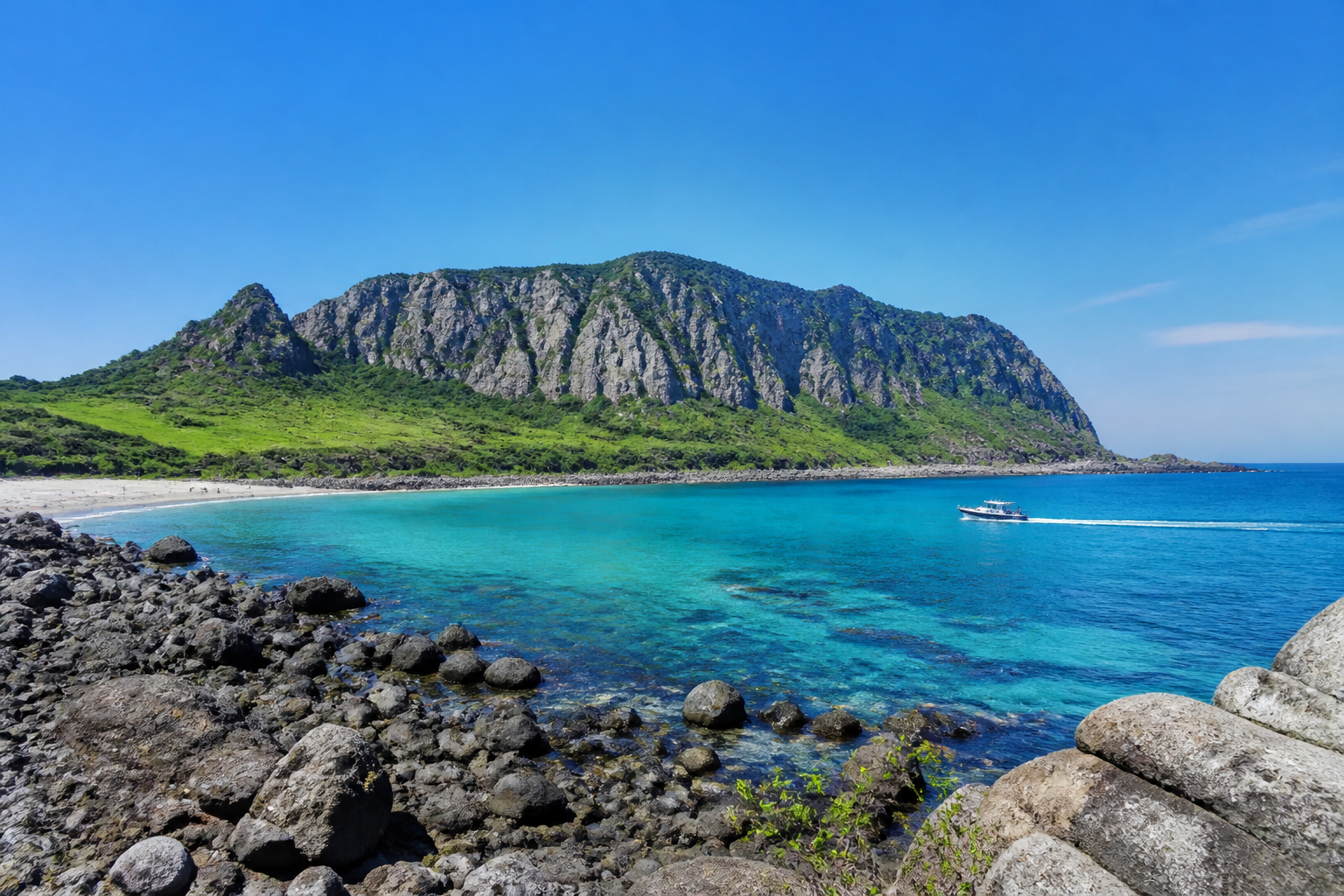
Jeju is often introduced through its volcanic landscapes and sea views, but after spending time here, I found the island’s real charm in the small moments: a bowl of warm abalone porridge after a windy hike, an orange farm tucked behind a stone wall, and bus rides through villages where the scenery changes every few minutes.
The **ITOP Forum**—the Inter-Islands Tourism Policy Forum—puts many of these island issues at the center of conversation. Representatives from island destinations gather to discuss how tourism can bring jobs and income without exhausting local communities, water supplies, landscapes, and culture. That balance is easy to talk about in a conference room, but on Jeju you can see why it matters.
## The Vibe & When to Go
Jeju feels both relaxed and surprisingly wild. The cities are busy, especially Jeju City and Seogwipo, but a short ride away you’ll find black-rock coastlines, quiet farming roads, forest trails, and villages where stone walls still divide the fields.
At this time of year, the island is generally mild, breezy, and changeable. Spring brings yellow canola flowers and fresh green hills, while early summer is warmer but still comfortable for walking. The wind can be strong near the coast, and rain showers sometimes arrive without much warning, so I always carry a light jacket and shoes that can handle wet paths.
The island is especially appealing right now because travelers are paying more attention to slower, lower-impact trips. Jeju has plenty of famous sights, but you don’t need to rush between them. Staying a little longer, eating in local restaurants, and visiting less crowded areas helps spread tourism income beyond the busiest attractions—the kind of result island tourism forums are trying to encourage.
## Must-See Spots: My Top Picks
### 1. Seongsan Ilchulbong at a quieter hour
Seongsan Ilchulbong, the dramatic volcanic tuff cone on Jeju’s eastern coast, is one of the island’s best-known sights. The climb is manageable for most people, though the steps are steep in places. From the top, you get wide views over the sea and the green crater.
I prefer arriving early in the morning, before tour buses fill the entrance area. If sunrise sounds too ambitious, go just after opening or late in the afternoon. Afterward, walk toward the nearby coast rather than heading straight back to the parking lot. You may see the **haenyeo**, Jeju’s famous female divers, preparing their catch or selling seafood at the shore.
### 2. Hallasan through a forest trail
Hallasan is the island’s center and South Korea’s highest mountain. You don’t have to attempt a full summit hike to enjoy it. The **Yeongsil** and **Eoseungsaengak** trails offer beautiful forest scenery and mountain views with less planning than the longer summit routes.
Weather changes quickly on Hallasan. Check trail conditions before leaving, bring water and snacks, and start earlier than you think you need to. Some routes require reservations, especially the summit trails, and access can be limited when conditions are poor.
For me, the best part was not reaching a dramatic viewpoint. It was the quiet stretch of trail where the sound of wind through the trees replaced traffic completely.
### 3. The west coast around Aewol and Hallim
The western coast is a good choice when you want sea views without committing to a full-day hike. Aewol has cafés and sunset spots, while Hallim offers beaches, lava formations, and access to **Hyeopjae Beach** and **Geumneung Beach**.
The cafés along Aewol’s waterfront can be busy and expensive, so I like walking a little farther from the main strip. You’ll find smaller coffee shops and local restaurants with better prices. At Hyeopjae, arrive before midday if you want a good place on the sand during peak season. Geumneung, next door, often feels calmer and has lovely views toward Biyangdo Island.
### 4. Seogwipo’s markets, waterfalls, and back lanes
Seogwipo is an easy base for exploring the southern side of Jeju. **Olle Maeil Market** is lively in the evening, with tangerines, grilled seafood, black pork, rice cakes, and snacks you can eat while wandering.
The nearby **Cheonjiyeon** and **Jeongbang** waterfalls are popular, but they are easy to combine with a walk through the old harbor area. I enjoyed stepping away from the market’s busiest lanes and finding modest seafood restaurants where families were eating together. Look for places with a short menu and plenty of local customers rather than restaurants displaying large photographs of every dish.
If you have time, walk part of the **Jeju Olle Trail**. These coastal paths connect villages and beaches, and even a two- or three-hour section gives you a better feel for everyday Jeju than racing between attractions.
## Practical Travel Advice
### Getting There & Visa
Most visitors arrive by air through **Jeju International Airport**. There are frequent flights from Seoul’s Gimpo Airport, as well as direct services from several cities in South Korea and parts of Asia. Flights from Seoul can be inexpensive outside weekends and holidays, but fares rise quickly around Korean public holidays.
Visa rules depend on your passport. Many nationalities can enter South Korea visa-free for short tourist stays, while others need to apply in advance. Some travelers may also need a **K-ETA**, although requirements and temporary exemptions can change. Check the official Korean immigration or embassy website before booking. Your passport should have enough validity for the length of your stay, and airlines may ask for proof of onward travel.
### Where to Stay
– **Jeju City:** Best for first-time visitors, airport access, restaurants, and bus connections. It is practical rather than especially peaceful.
– **Seogwipo:** A good choice for waterfalls, markets, southern beaches, and a slower evening atmosphere.
– **Aewol:** Popular with café lovers and sunset chasers. Expect higher prices in the most fashionable waterfront areas.
– **Seongsan:** Ideal if you want an early start at Seongsan Ilchulbong or plan to explore eastern Jeju.
– **Quiet rural villages:** Great for a retreat, but a rental car is usually helpful and restaurants may close early.
For a short trip, I would stay in Jeju City for one or two nights and then move to Seogwipo or the east coast. That saves you from crossing the island repeatedly.
### Getting Around
A rental car is the easiest option if you want to visit beaches, farms, forests, and small villages. Jeju’s roads are generally straightforward, but traffic near Jeju City and popular sights can be slow. An international driving permit may be required, depending on your home country and rental company.
Buses cover much of the island, but routes can be slow and less frequent outside the main towns. Use **Naver Map** or **KakaoMap** rather than relying only on Google Maps, which has limited functionality in South Korea.
For taxis, **Kakao T** is the most useful app. Taxis are practical for short trips, though finding one in remote areas can take time. If you plan to hike one section of the Olle Trail, check the return bus before setting off.
## Real Costs & Local Tips
South Korea uses the **Korean won (₩)**. Prices vary widely by season and location, but these are realistic daily estimates per person:
### Budget travel: around ₩70,000–₩120,000 per day
This usually covers:
– Hostel or simple guesthouse: ₩30,000–₩55,000
– Local meals and market food: ₩25,000–₩40,000
– Buses and occasional short taxi rides: ₩10,000–₩20,000
– Low-cost attractions and snacks: ₩5,000–₩15,000
### Mid-range travel: around ₩180,000–₩320,000 per day
This can include:
– Comfortable hotel: ₩100,000–₩180,000
– Restaurant meals and cafés: ₩50,000–₩80,000
– Car rental, fuel, or several taxi rides: ₩30,000–₩60,000
– Entrance fees and small shopping: ₩10,000–₩30,000
Prices jump during summer, weekends, and Korean holiday periods. A rental car also costs more once insurance and fuel are included.
Tipping is not expected in South Korea. At restaurants, cafés, taxis, and hotels, simply paying the bill is normal. Credit cards are widely accepted, though small market stalls and rural businesses may prefer cash. A **T-money card** is useful for buses and can be purchased or topped up at convenience stores.
### A few money-saving tricks
– **Eat one meal at a traditional market.** You can try several local foods for less than the price of a sit-down tourist restaurant.
– **Carry a refillable bottle.** Bottled water adds up, especially during hikes.
– **Avoid booking every night on the coast.** Staying a few streets inland can reduce hotel prices considerably.
– **Compare car rental insurance carefully.** The cheapest headline rate may not include the coverage you actually need.
– **Check café and attraction locations before traveling across the island.** Jeju looks compact on a map, but a cross-island trip can take much longer than expected.
– **Buy tangerines and snacks from local shops or markets.** Airport prices are often higher, and the selection is not necessarily better.
The main lesson I took from the ITOP Forum is that island tourism works best when visitors spend time, money, and attention in more than just the headline locations. On Jeju, that might mean choosing a family-run guesthouse, eating at a village restaurant, taking the bus to a coastal trail, or staying an extra night instead of trying to see the whole island in a single weekend.
Jeju still delivers the spectacular views people come for, but the quieter experiences are the ones I remembered most.
KEYWORDS: Jeju Island, Seongsan Ilchulbong